
Theodore Lowe, Ap #867-859
Sit Rd, Azusa New York
Find us here
Mirror Vs Camera: Which One Is More Accurate?
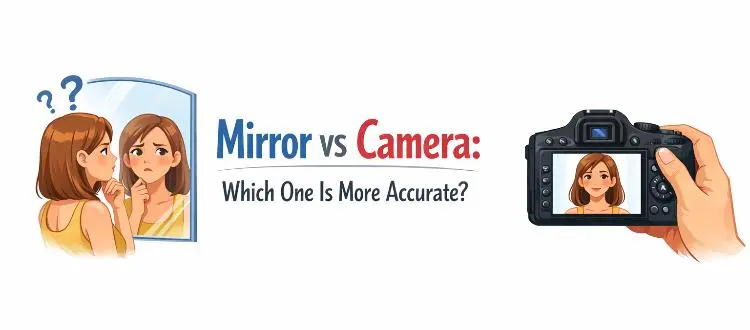
This puzzling phenomenon raises an intriguing question: which one is more accurate, the mirror or the camera? Understanding how each reflects your image can have a surprising impact on your self-perception and confidence. We’ll delve into the science behind mirrors and cameras, uncovering the truths and myths that might just change the way you see yourself.
Get ready to explore fascinating insights that will not only satisfy your curiosity but also empower you with knowledge. Don’t miss out on discovering which image truly represents the real you.
Perception Of Mirrors
Mirrors have fascinated humans for centuries. They provide a reflection of ourselves. People often wonder about their accuracy. Can mirrors truly represent what others see? This question intrigues many.
Mirrors influence self-perception greatly. They shape how we see our appearance. But is it the true reflection? Many factors play a role in mirror perception. Lighting, angles, and mirror quality affect the image. Understanding these elements is key.
How Mirrors Reflect
Mirrors reflect light directly. This creates an image of the object. The image appears reversed. This is due to the way light bounces off surfaces. The reversal is a common feature of mirrors. This phenomenon is known as lateral inversion.
Flat mirrors show a true-size reflection. The distance between you and the mirror matters. Closer objects appear larger. Further objects seem smaller. This affects how you perceive your reflection. A basic mirror reflects without distortion. But curved mirrors alter the image.
Common Misconceptions
Many believe mirrors show a perfect likeness. This is not always true. Lighting can change the mirror's accuracy. Bright lights enhance features. Dim lights may hide them. This affects how you see yourself.
Some think mirrors show their true height. The angle of the mirror can affect this. Standing too close or too far changes perception. Mirrors do not show depth accurately. They provide a two-dimensional view. This can distort body proportions.
People worry mirrors make them look different. Mirrors reflect directly, but only one perspective. Cameras offer multiple angles. This creates a varied image. Understanding these differences helps manage expectations.
Understanding Camera Lenses
Understanding camera lenses helps you see how they affect image accuracy. Many believe a camera shows the real world better than a mirror. This belief comes from the camera's ability to capture details. But camera lenses can change how things look. They alter images in ways that might surprise you.
Camera Types And Variations
Cameras come in many types. DSLR cameras are popular for high-quality images. Mirrorless cameras offer similar quality in a smaller size. Each type uses lenses that change how images appear. Smartphones have fixed lenses with limited zoom features. Their lenses are smaller but still affect image distortion.
Different cameras offer different perspectives. Wide-angle lenses capture more of the scene. Telephoto lenses zoom in, capturing details from afar. Each type provides a unique view. Understanding these variations helps you know how they affect accuracy.
Lens Distortion Effects
Lens distortion affects the image you see. Wide-angle lenses can make objects look stretched. Straight lines might appear curved. This type of distortion is common in landscape photography. Telephoto lenses compress space, making objects seem closer.
Distortion impacts accuracy. Barrel distortion makes objects bulge outward. Pincushion distortion pulls them inward. These effects change how you perceive the scene. Understanding distortion helps you choose the right lens. It ensures you capture images that reflect reality.
Image Quality Comparison
Mirror reflections show real-time images with natural colors, but can sometimes be distorted. Cameras capture still images and often enhance details, but may alter colors with settings. Both have unique strengths in representing reality.
When you're trying to capture your true self or the beauty around you, choosing between a mirror and a camera can be a bit of a dilemma. Each has its strengths and weaknesses, especially when it comes to image quality. Let's dive into the details to help you decide which one might show the most accurate version of reality.
Resolution And Clarity
The resolution and clarity of an image can significantly affect how you perceive it. Cameras, especially the latest smartphones, offer high-resolution images that capture intricate details. This means you can zoom in on a photo and see textures, like the weave of your clothing or the lines on your palm. Mirrors, on the other hand, reflect the light directly back to your eyes. This gives you a real-time view without any digital alteration. However, they can't enhance details like a high-resolution camera can. Consider this: Have you ever looked in a mirror and then snapped a selfie, only to notice more details in the photo than you could see in the mirror? That's the magic of resolution at work.
Color Accuracy
Color accuracy is another crucial factor in how we perceive images. Cameras often struggle to represent colors exactly as they appear in real life. Different lighting conditions can cause your skin tone or clothing colors to shift slightly. Mirrors reflect colors more naturally, showing you what you look like in real-time under the current lighting. This can be incredibly useful when you're getting ready for a big event and want to ensure your outfit matches perfectly. Imagine you're preparing for an important meeting and want to make sure your tie doesn't clash with your shirt. A quick glance in the mirror will give you a more reliable color check than a camera photo. When considering image quality, think about what matters most to you. Do you value the detailed clarity of a high-resolution camera, or do you trust the natural color reflection of a mirror? Your needs and preferences will guide you to the right choice.
Psychological Impact
The way you see yourself can change dramatically based on whether you're looking at a mirror or a camera. The psychological impact of these two mediums on self-image can be profound. It’s fascinating how a simple reflection or snapshot can influence your emotions, confidence, and self-perception.
Self-perception Influences
Have you ever noticed how you feel different about your appearance in a mirror versus a photo? The mirror often presents you with a familiar image, one you’ve grown accustomed to. Cameras, however, capture an image that can feel foreign or unexpected.
Mirrors reflect back a version of you that you control. You can adjust your posture, smile, or expressions instantly. In contrast, a camera freezes a moment in time, often highlighting imperfections you might not notice in real-time.
This discrepancy can affect how you perceive yourself. If a photo doesn’t match your mirror image, it might lead to self-doubt or questioning. Have you ever felt more critical of your appearance because of a photo? It's a common experience that many people share.
Cultural And Social Factors
Society plays a huge role in shaping how you feel about your reflection versus your photograph. Social media bombards you with perfect images, often heavily edited. This can set unrealistic standards for how you think you should appear in photos.
On the other hand, cultural norms can dictate your comfort with mirrors and cameras. In some cultures, mirrors are used for introspection, while cameras are seen as capturing true beauty. How does your culture influence your perception of mirrors and cameras?
Consider the impact of social expectations. Do you feel pressured to look a certain way in photos because of societal standards? This pressure can alter your self-esteem and affect how you interact with both mirrors and cameras.
Reflect on how these psychological impacts play out in your life. Do they affect your confidence or the way you present yourself to the world? Understanding these influences can help you develop a healthier self-image, regardless of the medium.
Technological Advances
In the ever-evolving world of technology, the debate over whether mirrors or cameras provide a more accurate reflection of reality continues to spark curiosity. Technological advances have transformed how we perceive ourselves and the world around us. With every leap in innovation, new possibilities emerge that challenge our traditional notions of accuracy and representation.
Augmented Reality Applications
Augmented reality (AR) is redefining how we interact with images. Imagine trying on clothes without leaving your home, or virtually experimenting with different hairstyles and makeup. These AR applications offer a glimpse into a future where mirrors might take a backseat.
Many apps now use AR to overlay digital elements on live camera feeds. This allows you to see how a new pair of glasses might look on your face or how a room could be furnished. Think about the convenience and creativity this brings to daily life.
However, how accurate are these digital representations? Can they truly capture the nuances of real-world textures and colors? As technology progresses, these questions become ever more relevant.
Future Of Imaging Technology
Imaging technology is advancing at lightning speed. Cameras are becoming smarter, equipped with AI to enhance photo quality and even predict your next shot. This could mean more accurate representations in the near future.
Will mirrors become obsolete as camera technology continues to improve? Imagine cameras that adjust settings to reflect true-to-life images, minimizing distortions and offering a perspective that mirrors struggle to match.
What does this mean for you? As technology continues to blur the line between reality and virtual representation, the choice between mirrors and cameras might become less about accuracy and more about preference. How will this shift affect how you view yourself and the world?
In essence, technological advances are reshaping the landscape of imaging. Whether you prefer the tangible reflection of a mirror or the dynamic possibilities of a camera, one thing is certain: the future holds exciting possibilities for how we see ourselves and our surroundings.
Practical Uses And Preferences
Choosing between a mirror and a camera depends on various factors. Each offers unique benefits suited to different needs. Understanding these can help decide which is more accurate for specific scenarios.
Daily Life Scenarios
Many people rely on mirrors daily. They provide instant feedback on appearance. Mirrors are quick and easy to use. They help with grooming, checking outfits, and facial expressions. Immediate reflection allows for quick adjustments.
Cameras capture moments to review later. They offer a different perspective. Photos can be shared with others or kept as memories. Cameras can show angles not visible in mirrors. Useful for seeing how others view you.
Professional Environments
In professional settings, both tools serve important roles. Makeup artists often prefer mirrors for real-time adjustments. They need precise reflections for detailed work. Mirrors assist in capturing true colors.
Photographers rely on cameras. They use them to capture artistic shots. Cameras allow for editing and enhancing images. Useful for ensuring high-quality final products. They provide a controlled environment to work within.
Conclusion
Choosing between a mirror and a camera depends on your needs. Mirrors show real-time reflections. Cameras offer captured images with potential modifications. Both have strengths and weaknesses. Mirrors provide immediate feedback; cameras capture memories. Consider what suits your situation best.
For quick self-checks, mirrors work well. For lasting records, cameras excel. Trust your preference. Each tool serves its unique purpose. Understanding both can help make an informed choice. Embrace their differences. Use them as needed. Both can enhance your visual experience in different ways.
Related blog posts
Ng Vs Tiff: Choosing the Right Format for Optimal Quality
Choosing the right image format can feel like standing at a crossroads, especially when you’re faced with options like NG and TIFF. Each format has its strengths and weaknesses, and understanding them is crucial to making the best choice for your needs.

Clipping Path Associate has empowered businesses globally for over 12 years. A passionate team is dedicated to providing meticulous photo editing services. Expertise is offered in a range of areas, from precise clipping paths to flawless image retouching. The company offers straightforward yet impactful solutions tailored for photographers, e-commerce enterprises, advertising agencies, web design firms, magazine publishers, printing companies, and more.
We Accept : 